Key takeaways
- AI voice agents combine speech recognition, a language model, tools such as calendars and CRMs, and natural-sounding speech.
- Booking, rescheduling, confirmations and simple questions are the strongest early use cases.
- Low latency, accurate understanding of names and dates, and a smooth handoff to people decide caller satisfaction.
- The FCC ruled in 2024 that AI-generated voices count as artificial voices under the TCPA, which matters for outbound calls.
Many businesses still lose calls: after hours, during busy periods, or when staff are with other customers. AI voice agents can now answer those calls, understand what the caller needs and complete routine tasks such as booking an appointment, with a quality that was not possible a few years ago.
How a voice agent works
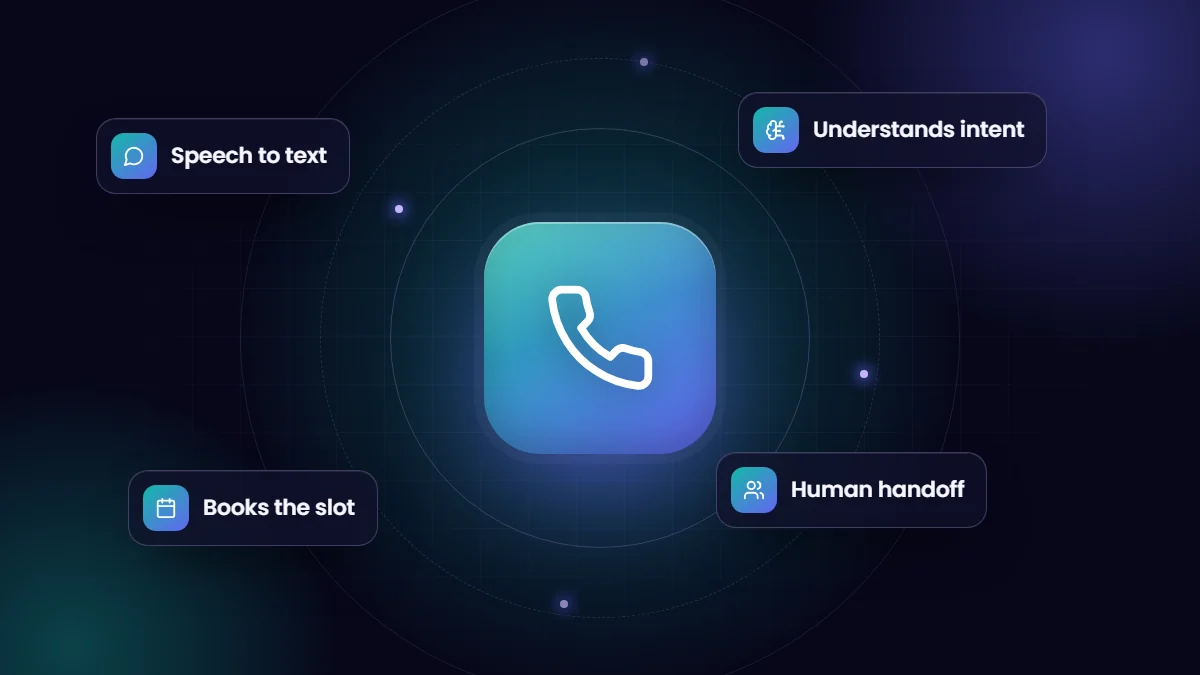
- Telephony connects the call to the agent through a phone number or contact center platform.
- Speech recognition turns the caller’s words into text in real time.
- A language model understands intent and decides what to do next.
- Tools check availability, book or move appointments, and look up or update CRM records.
- Speech synthesis replies in a natural voice.
- Handoff transfers to a person with context when needed.
Good use cases
- Booking, rescheduling and cancelling appointments.
- Confirming upcoming appointments and collecting confirmations.
- Answering common questions about hours, locations, services and preparation.
- Capturing new inquiries after hours and creating CRM leads.
- Routing callers to the right team with a summary of the request.
What makes callers happy
| Factor | Why it matters |
|---|---|
| Low latency | Pauses make conversations feel broken; responses should come quickly |
| Accurate names, dates and numbers | Mistakes in spelling or times cause failed bookings |
| Interruptions handled naturally | Callers often change their minds mid-sentence |
| Easy escalation | Callers must be able to reach a person without frustration |
| Confirmation | Repeat back key details and send a text or email confirmation |
Integration with your systems
A voice agent is only useful if it can act. Connect it to your scheduling system or calendar for real availability, and to your CRM so calls are logged, new callers become leads, and existing customers are recognized by phone number. Every call should leave a record with a summary and outcome.
Legal and consent considerations
- Disclosure: tell callers they are speaking with an automated assistant; it builds trust and may be required in some places.
- Outbound calls: in February 2024 the FCC confirmed that AI-generated voices are “artificial” under the Telephone Consumer Protection Act, so outbound calls using them generally need appropriate prior consent.
- Recording: call recording and transcription laws vary by state and country; some require all parties’ consent.
- Healthcare: if PHI is discussed, vendors need BAAs and the minimum-necessary principle applies.
This is general information, not legal advice. Confirm requirements for your use case and locations with counsel.
A sensible rollout
- Start with after-hours calls or overflow, where any answer beats voicemail.
- Limit the agent to booking and FAQs at first.
- Review recordings and transcripts weekly and refine prompts and flows.
- Expand hours and tasks once booking accuracy is proven.
We build voice and contact center integrations connected to Salesforce and scheduling systems; see our AI solutions.
Measuring success
| Metric | What it shows |
|---|---|
| Calls handled end to end | Share of callers served without a person |
| Booking accuracy | Bookings with correct date, time and details |
| Transfer rate and reasons | Where the agent needs improvement |
| Caller satisfaction | How callers feel about the experience |
| After-hours inquiries captured | New opportunities that would have reached voicemail |
Frequently asked questions
Will callers know they are talking to AI?
They should. Disclose it at the start of the call and offer an easy way to reach a person.
Can a voice agent use our existing phone number?
Usually yes, through call forwarding or integration with your phone system or contact center platform.
Can AI voice agents make outbound reminder calls?
Technically yes, but outbound calls with artificial voices are subject to TCPA consent rules. Get legal advice before launching outbound campaigns.