Key takeaways
- Insurance verification is often the slowest step between first contact and care.
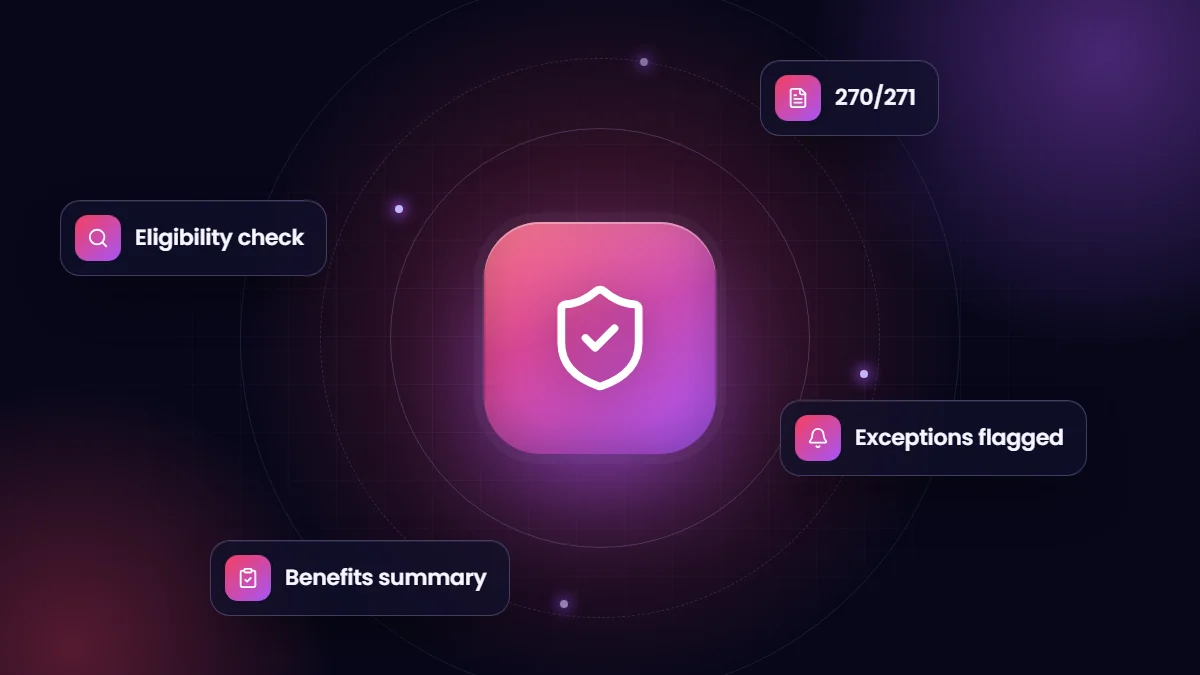
- Electronic eligibility checks use the standard X12 270 inquiry and 271 response transactions, usually through a clearinghouse or verification service.
- Automation handles routine eligibility quickly; complex benefits, authorizations and out-of-network questions still need people.
- Connecting verification to your CRM puts results where admissions and billing teams already work.
Before a patient can be scheduled or admitted, staff must confirm that coverage is active and understand what the plan covers. Done manually, that means payer portals, phone calls and hold music, sometimes for every new inquiry. Automation can remove much of that work.
Eligibility versus benefits
| What it answers | |
|---|---|
| Eligibility | Is the member’s coverage active, with which plan and payer? |
| Benefits | What does the plan cover for this service: deductible, co-insurance, co-pay, out-of-pocket maximum, visit limits? |
| Authorization | Does the payer need to approve the service in advance, and has it been approved? |
How electronic verification works
HIPAA established standard electronic transactions for healthcare. An eligibility inquiry is sent as an X12 270 transaction and the payer responds with a 271. Providers typically send these through a clearinghouse or a verification service, which handles connections to many payers and returns results in a readable form. Response detail varies by payer: some return rich benefit information, others only basic eligibility.
What to automate
- Trigger a check as soon as payer and member details are captured at intake.
- Write results to the patient or inquiry record: active status, plan, effective dates and key benefit values.
- Flag exceptions, such as inactive coverage, mismatched member details or unclear responses, for a person to review.
- Re-verify automatically before scheduled services or at set intervals for ongoing care.
- Create authorization tasks when the service type and payer require it.
Where people stay involved
Automation handles routine checks well, but specialists are still needed for out-of-network benefits, behavioral health and substance use treatment benefits that require detailed questions, authorization submissions, and cases where electronic responses are incomplete. The goal is to free those specialists from routine lookups so they focus on the cases that need them.
Connecting it to Salesforce
- Store insurance policies as records linked to the patient, with verification history.
- Call the verification service from Flow or Apex, or receive results from middleware.
- Show a clear verification summary on the admissions screen.
- Report on turnaround time, exception rates and coverage mix by referral source.
Privacy considerations
Verification involves protected health information, so services involved must sign business associate agreements, access to insurance details should follow the minimum-necessary principle, and logs should avoid storing unnecessary PHI.
Results to expect
Teams that automate routine eligibility usually see faster responses to inquiries and fewer billing surprises. In one healthcare rebuild we delivered, automated insurance validation reduced manual insurance checks by 70%. See our industry solutions for how we approach healthcare workflows.
A worked example: admissions inquiry
An admissions coordinator captures a caller’s insurance card details during the first call. Saving the record triggers an electronic eligibility check through the organization’s verification service. Within moments, the record shows active coverage, the plan name and key benefit values for the service type. Because the payer requires prior authorization for the requested level of care, the system creates an authorization task for the utilization review team. If the response had been unclear, the record would have been flagged for a benefits specialist to call the payer.
Metrics to track
| Metric | Why it matters |
|---|---|
| Time from inquiry to verified coverage | Directly affects how quickly people can start care |
| Share verified automatically | Shows how much routine work automation handles |
| Exception rate by payer | Highlights payers whose responses need manual follow-up |
| Claim denials for eligibility reasons | Shows whether verification is catching problems before service |
Frequently asked questions
What is a 270/271 transaction?
The HIPAA standard electronic format for asking a payer about a member’s eligibility (270) and receiving the response (271).
Can all benefits be verified electronically?
Not always. Detail varies by payer and service type, so complex or specialized benefits may still require a call or portal check.
Does verification guarantee payment?
No. Payers typically state that eligibility and benefits information is not a guarantee of payment; authorizations and claim rules still apply.