Key takeaways
- Admissions teams live or die by speed: callers who are not helped quickly often call another provider.
- Salesforce can unify calls, web forms and referrals into one queue with clear next steps.
- Insurance verification, clinical pre-screening and bed availability should be visible in the same place.
- Privacy obligations, including HIPAA and, for substance use disorder records, 42 CFR Part 2, shape the design.
For addiction treatment and behavioral health providers, the admissions process is where people in crisis first reach out. A missed call or slow response can mean someone does not get care. Many providers still manage admissions with spreadsheets, sticky notes and disconnected phone systems. Salesforce can bring it all together.
The admissions journey
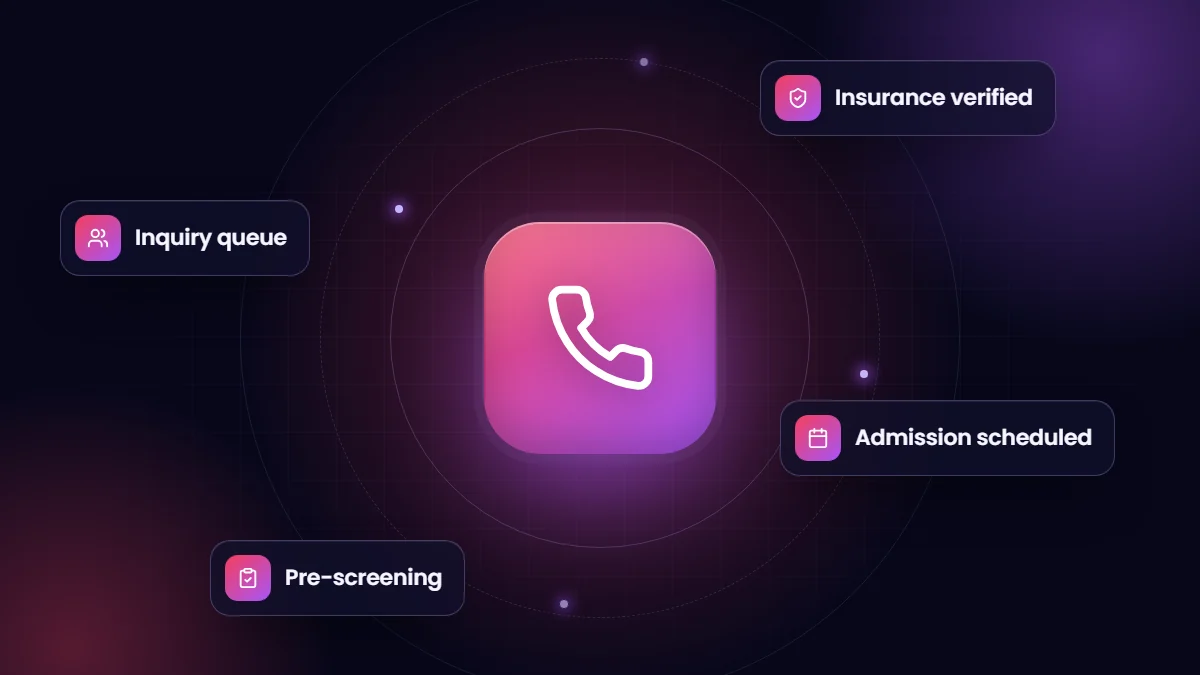
- Inquiry arrives by phone, web form, chat or referral partner.
- An admissions coordinator gathers basic details and assesses urgency.
- Insurance is verified and benefits are checked.
- Clinical pre-screening determines the appropriate level of care.
- Admission is scheduled, travel arranged and the record handed to clinical systems.
What to build
- One inquiry queue. Every call, form and referral creates or updates a record, routed to the right coordinator with response timers.
- Telephony integration. Click-to-call, call logging and screen pops so coordinators see history instantly.
- Guided intake. Screen flows that capture the same information every time, including consent.
- Insurance verification. Tasks or automated checks through a verification service, with results on the record.
- Referral tracking. Which partners, websites and campaigns produce admissions, not just calls.
- Status and follow-up. Automatic follow-up tasks for callers who are not ready yet.
Privacy by design
Admissions data includes protected health information, so HIPAA applies, and a business associate agreement with Salesforce covering the services you use is required. Programs that are federally assisted and hold themselves out as providing substance use disorder treatment are also subject to 42 CFR Part 2, which adds restrictions on disclosure of patient records. HHS finalized updates to Part 2 in 2024 that align it more closely with HIPAA, with a compliance date in February 2026. Design access controls, consent tracking and data sharing with your compliance team from day one.
Reports admissions leaders need
| Metric | Why it matters |
|---|---|
| Speed to first response | Faster responses mean more people helped |
| Inquiry-to-admission rate by source | Shows which referral sources and campaigns work |
| Insurance verification turnaround | A common bottleneck before admission |
| Lost inquiries and reasons | Reveals capacity, payer or process gaps |
We have built admissions, intake and insurance verification workflows for behavioral health organizations. Our industry solutions page explains how we approach healthcare projects.
A suggested data model
| Object | Purpose |
|---|---|
| Inquiry (or Lead) | Each contact attempt with source, urgency and status |
| Person Account or Contact | The prospective patient and, separately, family members or referents |
| Insurance Policy | Payer, member ID, verification status and benefits summary |
| Referral Source | Partners, facilities and professionals who refer, with performance |
| Admission | Level of care, facility, scheduled date and handoff status |
Automation that saves admissions time
- Route new inquiries by program, location or language, with escalation if untouched.
- Create follow-up tasks automatically for callers who are not ready to admit.
- Request insurance verification as soon as payer details are captured.
- Notify the clinical team when pre-screening is complete.
- Thank referral partners automatically when a referral is admitted, within privacy rules.
Questions to settle with compliance
- Which staff roles may see clinical details versus contact details only?
- How is consent to share information with family or referral partners recorded?
- Which records fall under 42 CFR Part 2, and how are they labeled and restricted?
- What may be included in email or SMS follow-ups?
Frequently asked questions
Can Salesforce replace our EHR for admissions?
Salesforce typically manages pre-admission relationships and workflow, while the EHR holds clinical records. Integrations hand the patient over at admission.
Which Salesforce edition suits an admissions CRM?
Most admissions CRMs run on Sales or Service Cloud with custom objects; Health Cloud is an option when its patient-centric model fits.
Is Salesforce compliant with 42 CFR Part 2?
Compliance depends on how you configure and govern it. Work with counsel to design consent, access and disclosure controls.